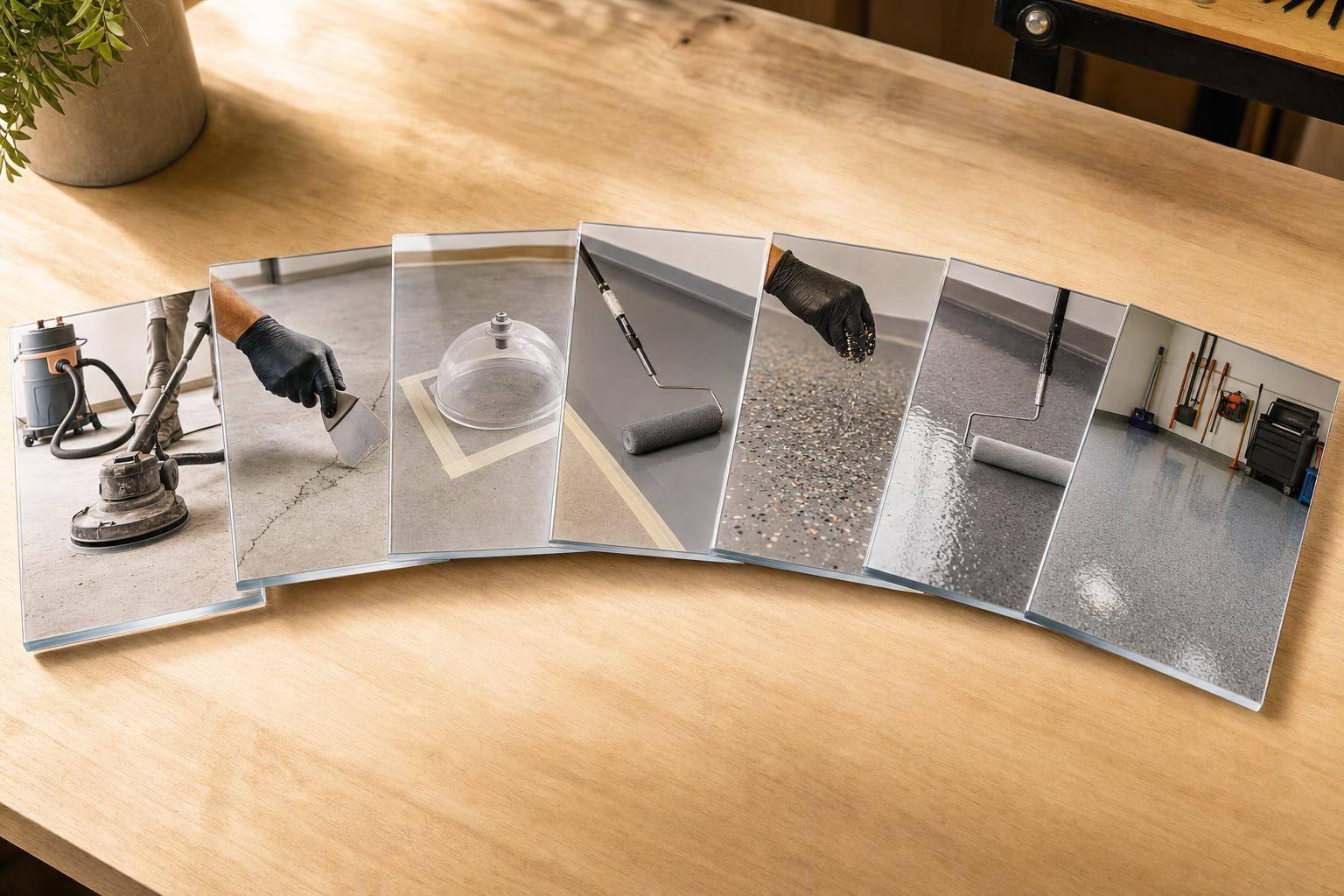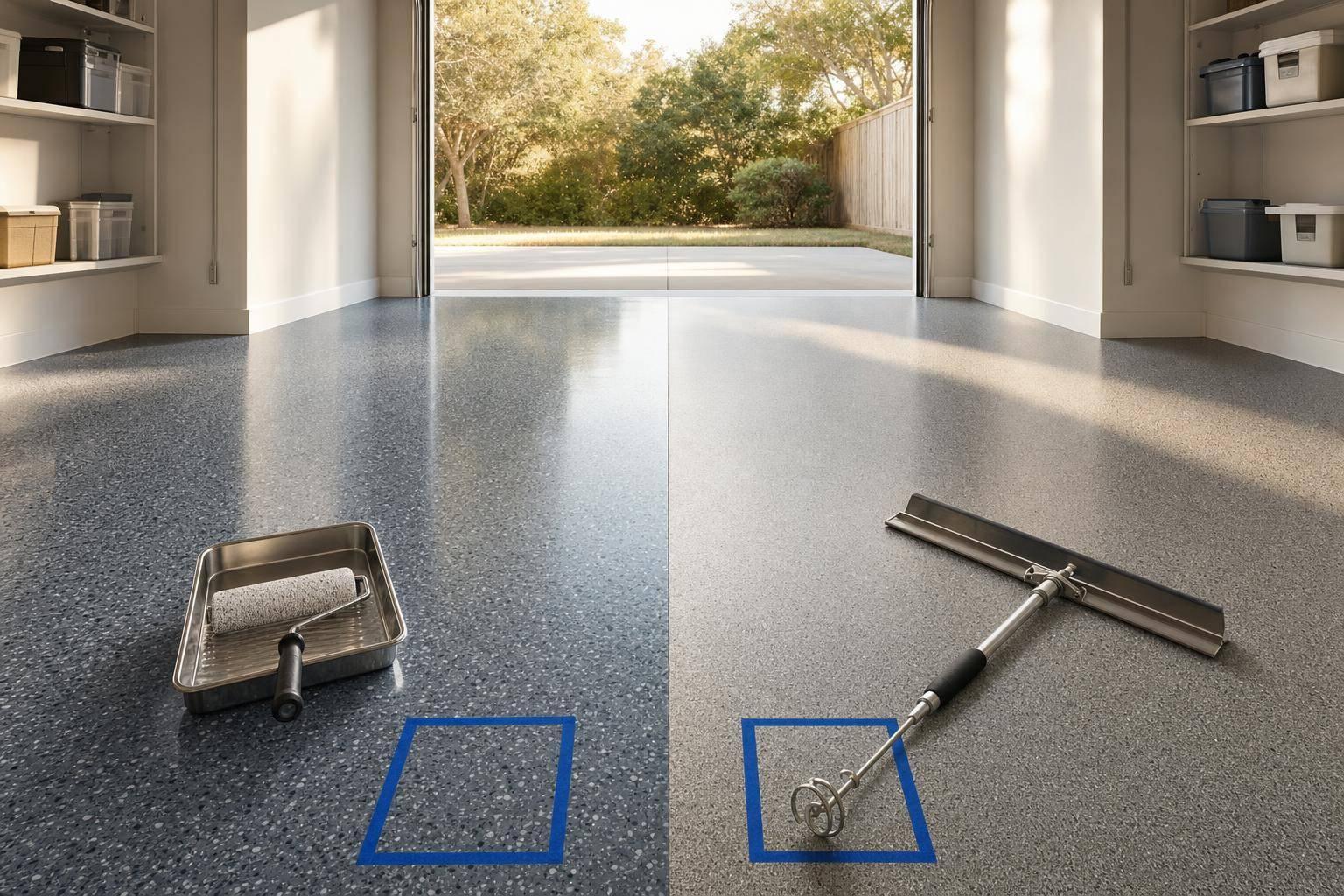
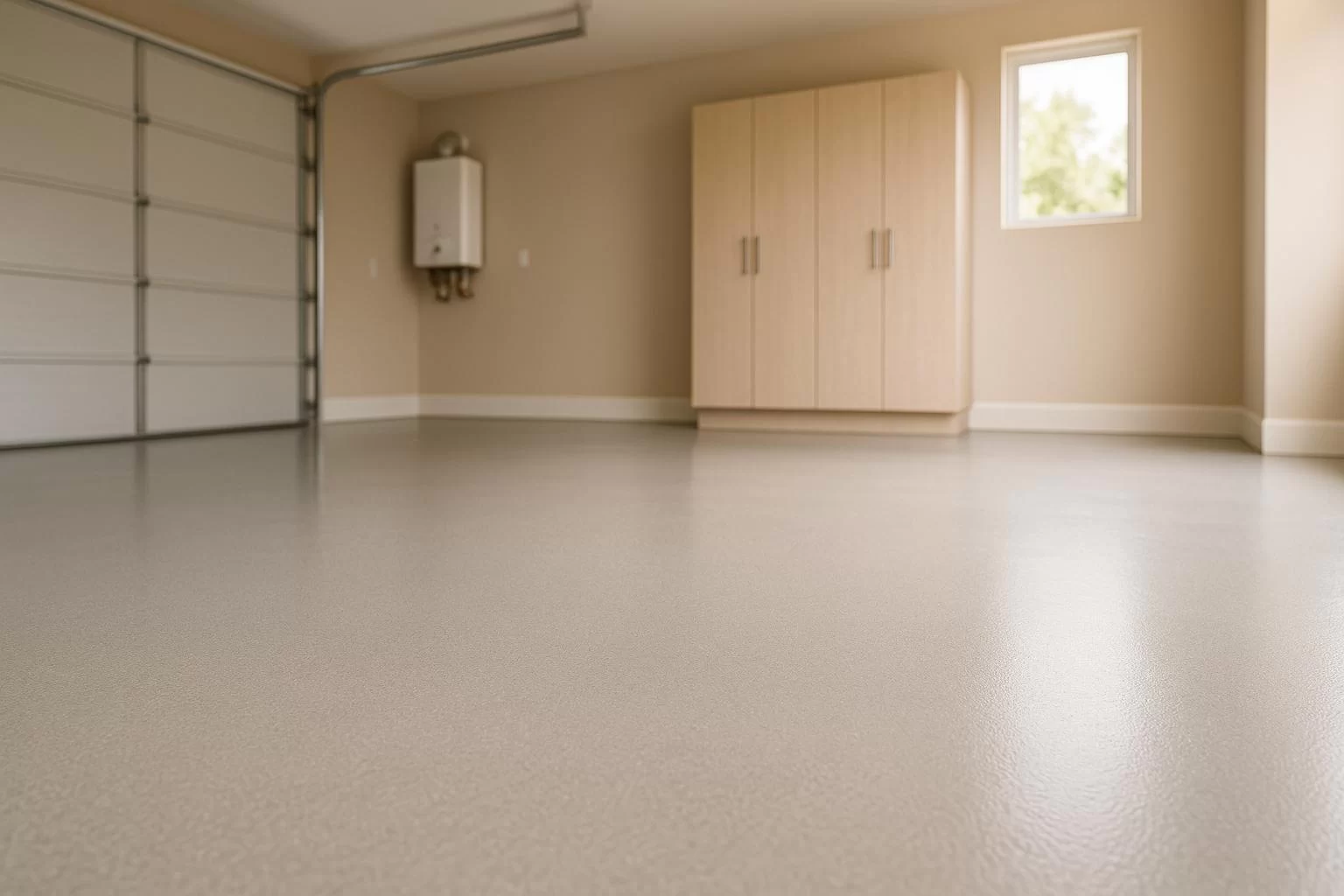
Once you have determined the necessary thickness, you can also use our garage floor coating cost calculator to estimate your project budget.
Finding the Right Garage Floor Coating Thickness
When it comes to protecting your garage floor, choosing the proper coating thickness is key to long-lasting results. A well-applied layer of epoxy or protective sealant can shield your surface from wear, spills, and cracks, but how thick should it be? That’s where a tool like our garage floor thickness estimator comes in handy. It helps you figure out what works best based on your specific situation.
Why Thickness Matters
The durability of your floor depends on several factors: the state of the concrete, how often it’s used, and how long you want the protection to last. For instance, a brand-new slab might only need a thinner coat to seal it properly, while an older, worn-out surface could require a heavier application to cover imperfections and withstand daily abuse. Usage also plays a role—frequent vehicle traffic demands more robust protection than a space used for light storage.
Tailored Solutions for Your Space
Instead of guessing, use a practical guide to get a personalized recommendation. By considering wear levels and polyurea coating lifespan, you can ensure your garage surface stays tough and functional for years. Take a moment to assess your needs, and you’ll be on your way to a stronger, better-protected floor by choosing from the top long-lasting coating options.
FAQs
Why does floor condition affect coating thickness?
The condition of your garage floor plays a big role in how much coating you’ll need. A new floor starts with a smoother, more even surface, so it often requires less thickness—around 10 mils as a base. But if your floor has moderate or heavy wear, with cracks or uneven spots, a thicker layer (15-20 mils base) helps fill those imperfections and provides better protection. It’s all about building a strong foundation for durability.
How does usage level change the recommendation?
Usage level tells us how much stress your floor will face. Light use, like personal storage or occasional foot traffic, doesn’t demand much extra thickness. But if you’ve got medium use with heavier items or heavy use with frequent vehicle traffic, we bump up the recommendation by 5-10 mils. That extra layer helps resist wear and tear from constant pressure or abrasion, keeping your floor looking good longer.
Can I trust these results for my specific garage?
Our calculator gives you a solid starting point based on typical scenarios and industry standards. It factors in floor condition, usage, and desired durability to suggest a thickness in mils. That said, every garage is unique—things like climate, specific damage, or coating type can make a difference. We always recommend chatting with a local professional to confirm the best approach for your project.