When selecting a concrete coating, the raw materials used directly impact performance, durability, and environmental footprint. Here’s what you need to know:
- Material Thickness Matters: Industrial epoxy coatings (8–12 mils) last up to a decade, while thinner retail versions (2–4 mils) fail sooner.
- Key Materials: Coatings use resins (epoxy, polyurea, polyaspartic, and polyurethane), pigments, fillers, and additives to enhance durability, UV resistance, and slip resistance.
- Environmental Challenges: Cement production contributes 8% of global CO2 emissions and 10% of industrial water use. Mining for raw materials also disrupts ecosystems and creates waste.
- Sustainable Practices: Using recycled materials (fly ash, slag) and low-impact manufacturing (UV-curing, waterborne tech) reduces emissions and waste.
- Penntek Evolution System: A high-performing polyurea and polyaspartic system offers durability, UV stability, and quick installation (1 day) with a 15-year warranty.
Considering a concrete coating? Watch this video first.
sbb-itb-a0e5ae3
Primary Raw Materials in Concrete Coatings
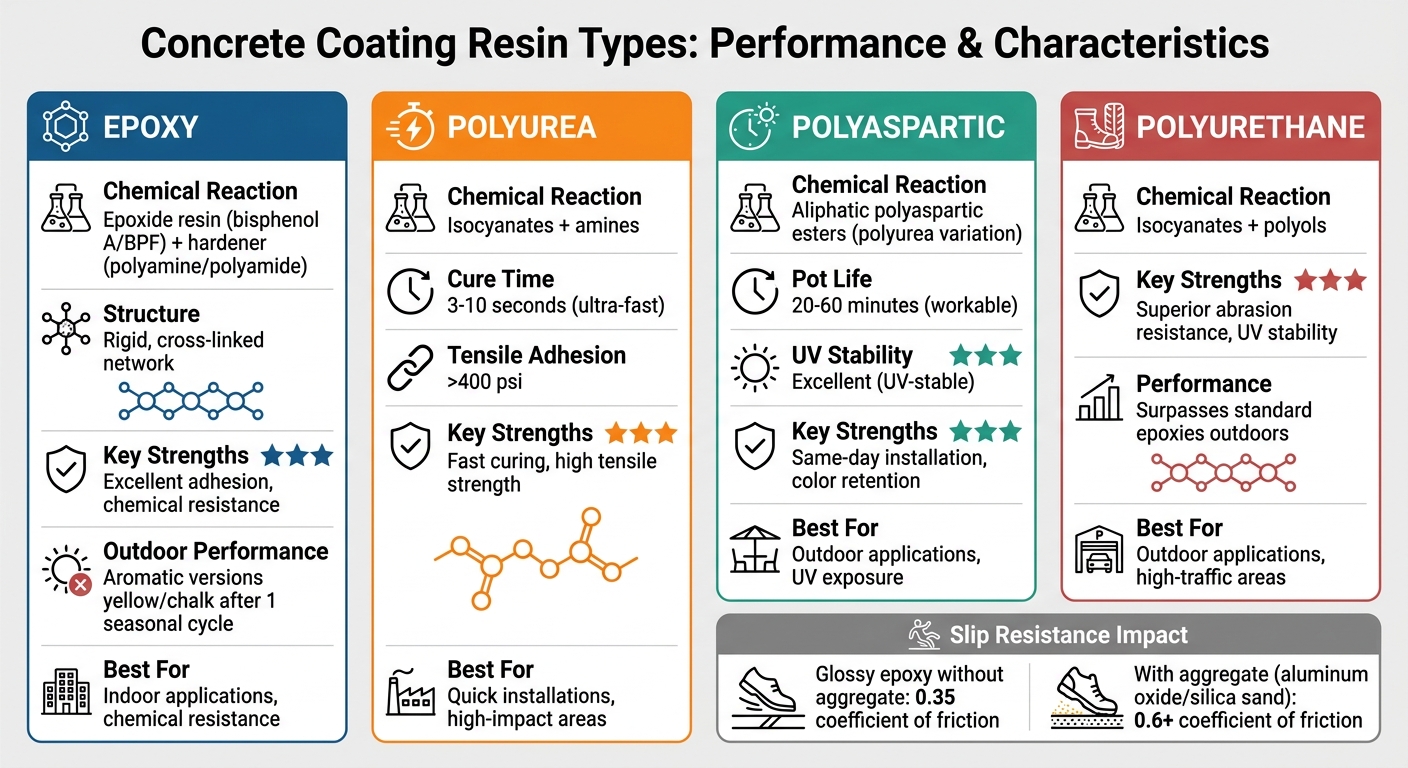
Concrete Coating Resin Types: Performance Comparison Chart
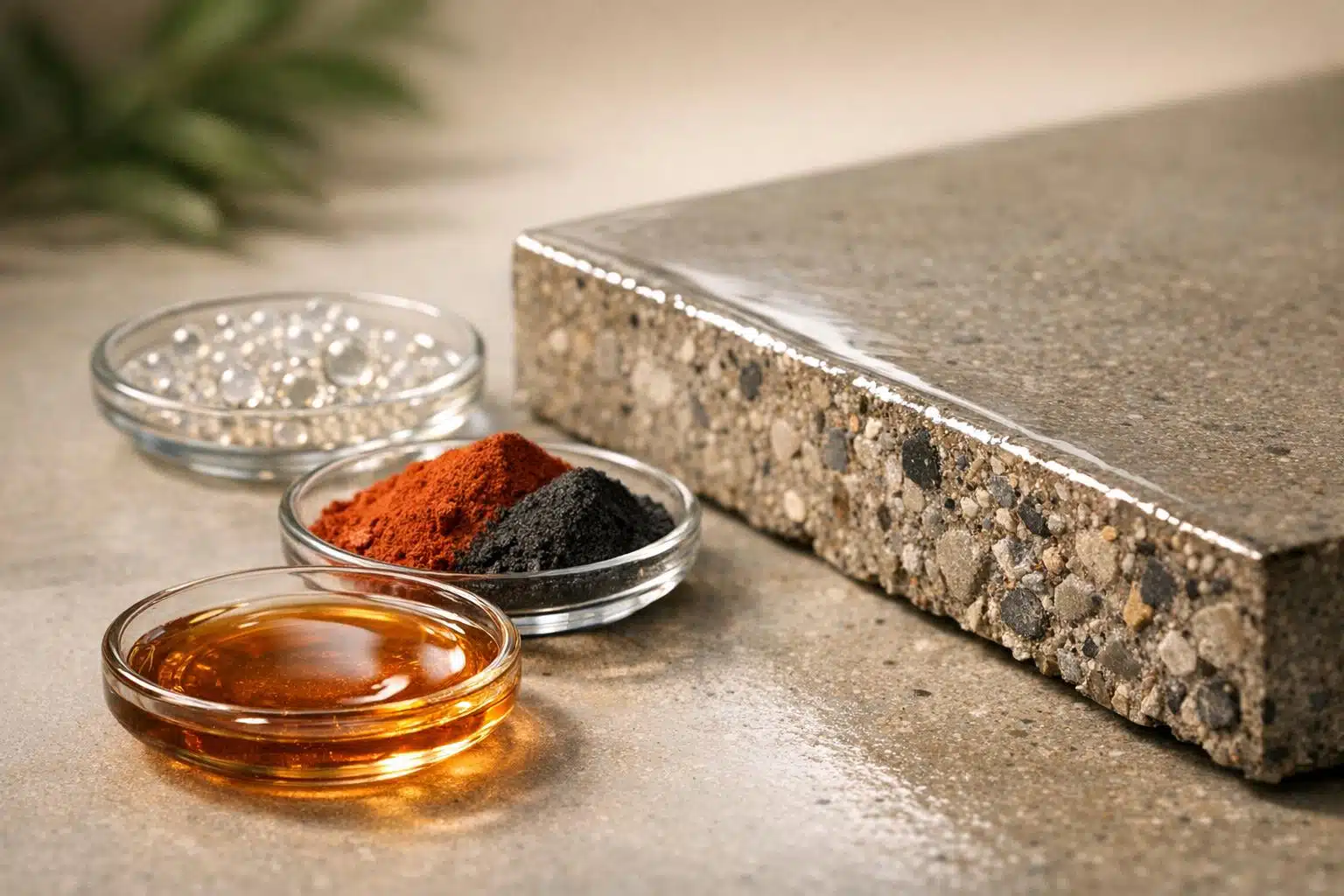
Concrete coatings rely on three main types of raw materials: resins and binders, pigments and fillers, and additives and solvents. These materials play a crucial role in determining the performance, durability, and environmental impact of the coatings. Let’s break down each group and their specific contributions.
Resins and Binders
Resins are the backbone of any coating system, providing the chemical structure that ensures durability and adhesion.
- Epoxy: This resin relies on a two-part reaction between an epoxide resin (like bisphenol A or BPF) and a hardener (polyamine or polyamide). The result? A rigid, cross-linked network that bonds tightly to concrete, offering excellent adhesion and chemical resistance.
- Polyurea: Produced by the reaction of isocyanates with amines, polyurea systems cure incredibly fast – sometimes in just 3 to 10 seconds. They also deliver impressive tensile adhesion strength, often exceeding 400 psi.
- Polyaspartic: A variation of polyurea, these coatings use aliphatic polyaspartic esters. They’re UV-stable and have a workable pot life of 20–60 minutes, making them ideal for same-day installations.
- Polyurethane: Combining isocyanates with polyols, polyurethane coatings excel in abrasion resistance and UV stability, surpassing standard epoxies in outdoor applications.
For outdoor use, the choice between aromatic and aliphatic chemistries is critical. Aromatic epoxies can yellow and chalk after just one seasonal cycle in sunlight, while aliphatic formulations retain their color and gloss.
Pigments and Fillers
Pigments and fillers enhance both the appearance and functionality of coatings.
- Slip Resistance: Materials like aluminum oxide, silica sand, or polymer grit are added to wet coatings to improve slip resistance and mechanical interlocking. For instance, a glossy epoxy without aggregate can have a coefficient of friction as low as 0.35, but adding aggregate can raise it to 0.6 or higher.
- Decorative Features: Vinyl flakes are commonly used in residential garage systems to add color and disguise minor surface imperfections.
Additives and Solvents
Additives are specialized chemicals that fine-tune coating performance for specific conditions.
- UV Stabilizers: Essential for outdoor applications, these additives protect coatings like standard epoxies from degrading quickly under sunlight.
- Performance Enhancers: Superplasticizers improve flowability, while air-entraining agents enhance freeze-thaw resistance. Some high-performance systems even include silver-ion or copper-based additives for antimicrobial properties.
Solvents, on the other hand, adjust viscosity and improve surface wetting. However, they come with drawbacks – namely, the emission of volatile organic compounds (VOCs). Regulations like those from the South Coast Air Quality Management District cap VOCs in floor coatings at 100 g/L. This has driven the adoption of 100% solids formulations, which eliminate solvents entirely. These formulations not only produce zero VOC emissions but also deliver thicker coatings – typically 8–12 mils per coat.
Understanding the role of these materials is essential for assessing their sourcing and lifecycle impact, which will be discussed in the next sections.
Environmental Impact of Raw Material Extraction
The environmental toll of raw material extraction is a crucial starting point when evaluating the overall impact of concrete coatings. While their chemical performance is impressive, especially when choosing concrete coatings over epoxy, particularly when protecting concrete in extreme climates, the process of obtaining the materials needed for these coatings comes with a heavy cost to ecosystems and resources.
Quarrying and Mining Effects
The extraction of limestone, aggregates, and other minerals often involves large-scale quarrying and mining, which drastically alters local environments. Removing vegetation not only destroys habitats but also eliminates natural carbon sequestration. On top of that, these operations create impervious surfaces that generate five times more runoff compared to natural woodlands of the same size. This runoff leads to significant soil erosion and introduces pollutants like heavy metals and construction dust into nearby water systems.
Another concern is the release of natural radioactive elements, such as radon, uranium, and thorium, which are sometimes present in extracted stone. These elements can be released during processing, posing health risks. Additionally, construction dust from mining and material handling contributes to air pollution, impacting both workers and surrounding communities.
These environmental disruptions also bring energy and water challenges into sharp focus.
Energy and Water Usage
Cement production is a major contributor to concrete’s energy footprint, driving 70% of its embodied energy. The limestone calcination process alone emits CO2 at rates 2.3 to 3.3 times the theoretical minimum. Transportation of raw materials adds another 7% to this footprint, though local sourcing can help reduce this impact.
Water use is another pressing issue. Concrete production accounts for 1.7% of global water withdrawal, with nearly 10% of industrial water use worldwide going to this sector. The situation is expected to worsen – by 2050, 75% of water demand for concrete production is projected to occur in regions already experiencing water stress. The washing and preparation stages during raw material processing further strain local water supplies, particularly in arid areas where water is already scarce.
But the challenges don’t stop at energy and water. Waste management is another critical concern.
Waste and Byproduct Management
The extraction and processing of raw materials generate significant waste. Concrete waste by-products make up approximately 17% of global landfill content. Additionally, mine refuse and residues left at extraction sites often contain toxic substances that can leach into groundwater over time, creating long-term environmental hazards.
Still, there are ways to address these issues. Sustainable practices can cut water consumption in manufacturing by up to 80% and reduce embodied energy by up to 75%. Using industrial by-products, like fly ash from power plants or slag from blast furnaces, as alternative binders can divert waste from landfills while reducing the need for new material extraction. Recycled concrete rubble also offers a way to replace virgin aggregates, helping to minimize the need for additional quarrying. These strategies present real opportunities to lower the environmental footprint of the industry.
Responsible Sourcing and Processing Methods
The environmental issues faced by the concrete coatings industry aren’t set in stone. By rethinking resource use, emissions, and waste, the industry can take steps to reduce its environmental footprint.
Renewable and Recycled Materials
Switching from petroleum-based resins to renewable and recycled materials can lower both carbon emissions and waste. For instance, industrial by-products like fly ash from power plants and slag from blast furnaces can replace virgin materials, cutting down on extraction needs. Similarly, agricultural by-products such as rice husk ash and wood pulp offer eco-friendly alternatives. Superhydrophobic coatings made from rice husk ash, for example, can achieve impressive water resistance with contact angles up to 158°.
Recycled industrial waste can also be transformed into geopolymer coatings, which have shown strong performance in harsh marine environments for nearly a decade. These coatings often outperform traditional organic polymers in seawater and can reduce the corrosion rate of reinforced concrete by 86% to 96% compared to uncoated surfaces. Additionally, bio-based polyols derived from soybean or castor oil are used to create polyurethane coatings with up to 60% bio-based content. These coatings eliminate the need for harmful solvents while maintaining durability.
Low-Impact Manufacturing Techniques
How materials are processed is just as important as the materials themselves. Manufacturing innovations are helping to address environmental concerns head-on. For example, UV-curing processes use ultraviolet light at room temperatures to create cross-linked polymeric networks. This approach avoids hazardous solvents and uses less energy compared to traditional heat-intensive methods. Waterborne technology, which uses water as a solvent, further reduces VOC emissions, improving both environmental and worker safety during production and application.
Carbon mineralization is another promising method. Companies like CarbonCure Technologies have retrofitted plants worldwide to inject recycled CO₂ into materials during the wet-mix stage. This process not only permanently stores CO₂ but also strengthens the material. Solidia’s patented carbonation curing process, which uses a water–CO₂ solution, can cut the carbon footprint of precast concrete by up to 70%. Meanwhile, Ceratech produces concrete with 95% fly ash and 5% liquid additives, significantly reducing reliance on carbon-heavy Portland clinker.
Even small changes can add up. Replacing just 1% of cement with fly ash reduces manufacturing energy use by 0.7%. High-solid coatings, which increase solid content to 70%–80%, and hyperbranched coatings, which streamline production with single-step synthesis, further reduce energy use and VOC emissions.
Local Sourcing and Transportation
Sourcing materials locally is another way to cut environmental impacts. Aggregates like sand and gravel are often available from nearby quarries, while materials such as fly ash and slag can be sourced from regional industrial facilities. This approach reduces transportation-related emissions and supports circular economy practices.
Local sourcing has already proven effective in projects like the I-35W Saint Anthony Falls Bridge, where the concrete mix was optimized using varying amounts of Portland cement, fly ash, and slag to minimize environmental impact. It also plays a role in addressing water scarcity. Since concrete production accounts for nearly 10% of global industrial water use, using water from local sources can ease pressure on stressed watersheds and improve resource management at the regional level.
The Penntek Evolution System: Material Composition and Performance
Material Composition
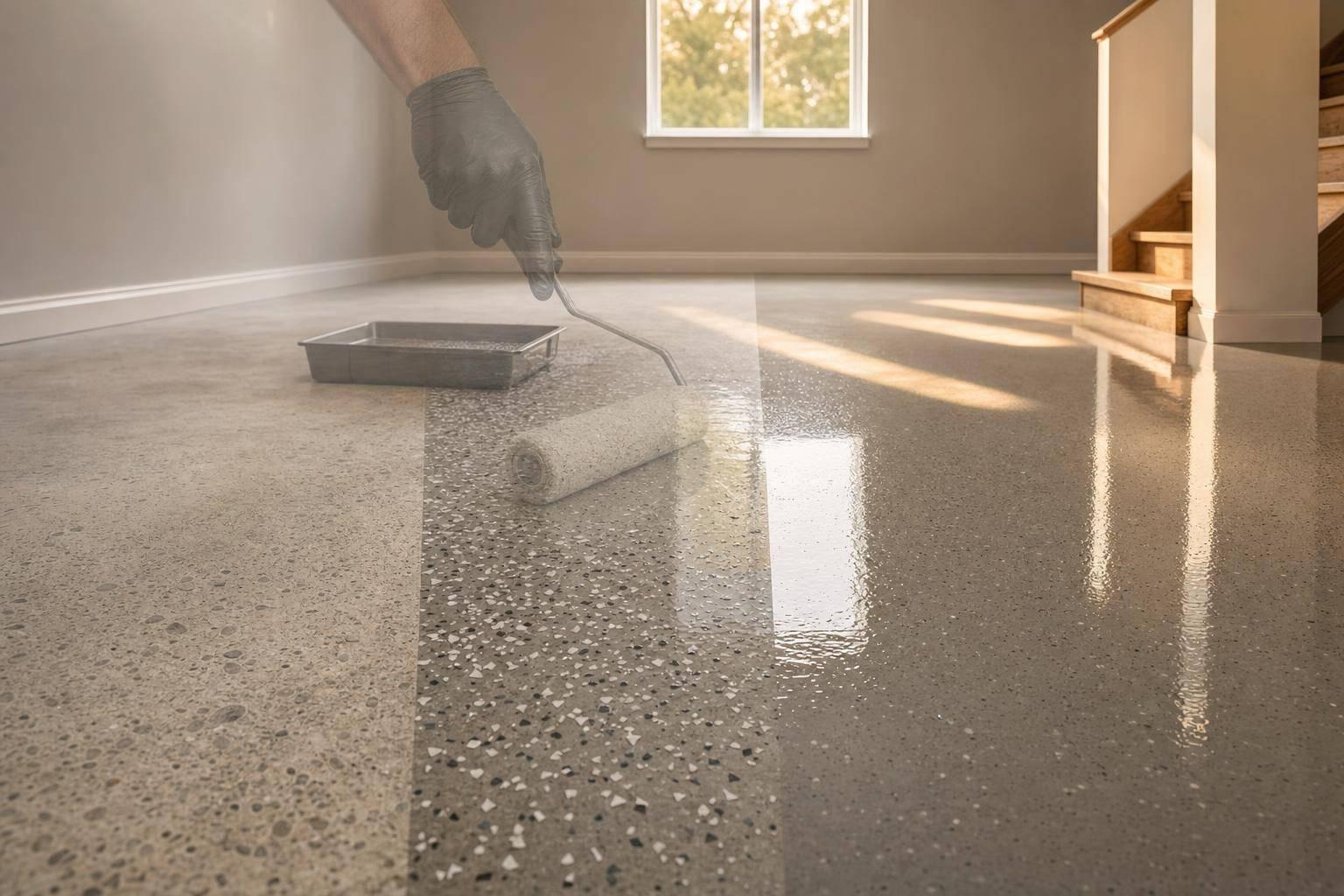
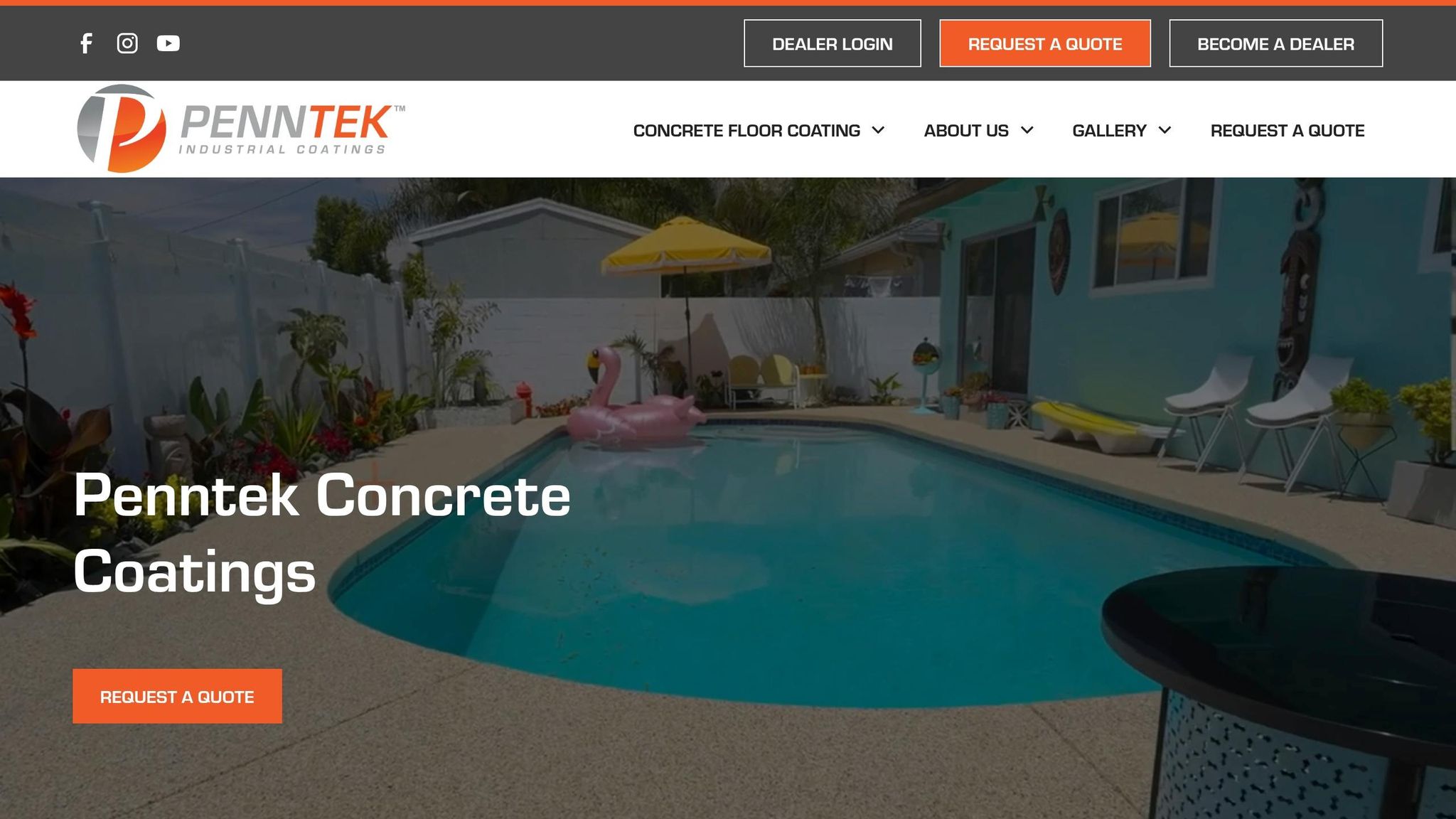
The Penntek Evolution system uses a certified multi-layer approach that combines a polyurea base, colored vinyl chips for texture, and a polyaspartic topcoat. This setup creates a flexible polymer structure, standing in contrast to the rigid and brittle characteristics of traditional epoxy coatings.
Since 2010, Penntek has been refining its technology to balance practical application with high performance. The polyurea base offers exceptional elasticity and impact resistance, while the polyaspartic topcoat provides chemical resistance and UV stability. For environments requiring extra durability, the Quartz floor option includes additional materials designed to handle harsh chemicals and extreme conditions.
Performance Compared to Epoxy
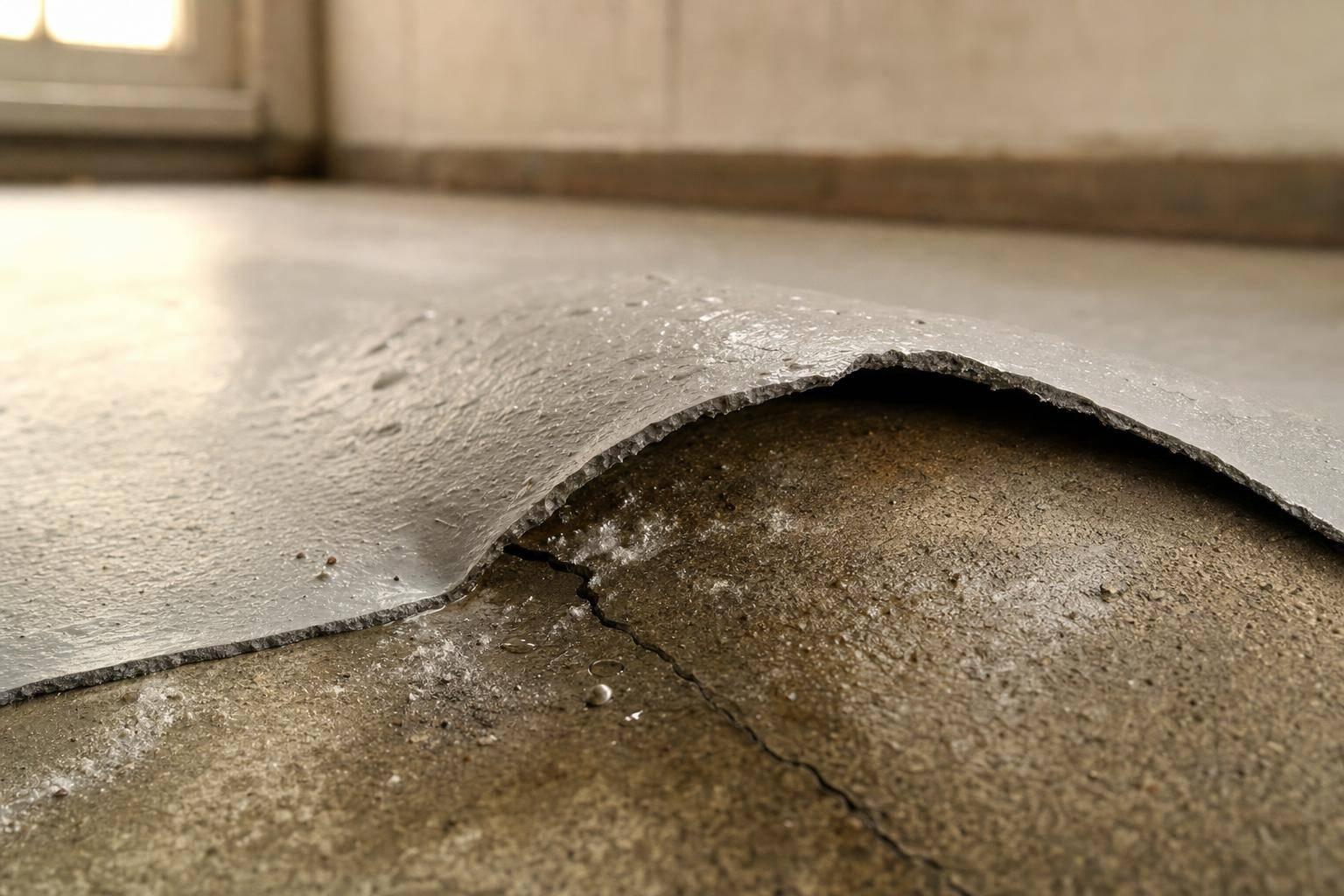
When it comes to performance, Penntek Polyurea outshines epoxy in elasticity, impact durability, and stain resistance. The polyaspartic topcoat also eliminates the "hot tire pick-up" issue, where heat can cause epoxy coatings to soften and lift.
"Since 2010, Penntek continues to outperform the competition with the most advanced technologies available for floor coating systems." – Penntek Coating
This UV-stable formula ensures the coating won’t yellow or fade, even in outdoor applications like patios or pool decks. It comes with a lifetime warranty against UV degradation for the original purchaser. Professional installations typically cost between $9 and $12 per square foot, meaning a 500-square-foot project would run about $4,750 to $5,250. Additionally, the system is backed by a 15-year or longer warranty against issues like chipping, peeling, separating, or delaminating.
Installation Process and Expertise
The material advantages of the Penntek system are matched by an efficient installation process. Croc Coatings completes the entire installation in just one day, a major time saver compared to traditional epoxy systems that often take several days.
The process begins with industrial diamond grinders that open the concrete’s pores, creating a surface profile for a strong mechanical bond. Cracks, pits, and spalled areas are then repaired using specialized menders and fillers, ensuring a seamless foundation that blocks moisture infiltration.
Thanks to the rapid curing of the polyurea and polyaspartic layers, the coating sets quickly without sacrificing bond strength or durability. This streamlined process minimizes disruption for homeowners and businesses while ensuring proper surface preparation – a key factor for the 15-year warranty. Croc Coatings serves both residential and commercial spaces across North Idaho and Eastern Washington, including Spokane and the Tri-Cities, WA.
Conclusion: Performance and Environmental Responsibility
Concrete coatings come with considerable environmental challenges. Cement production alone is responsible for 8% of global CO2 emissions and nearly 10% of industrial water usage, while concrete waste makes up 17% of landfill content. These statistics highlight the importance of prioritizing durability over frequent replacement or disposal.
This is where coatings that extend the lifespan of concrete structures become invaluable. High-performance systems can add 15 to 20 years to a structure’s usability. For perspective, replacing a 1,000-ton concrete structure at 30 years instead of 50 results in an extra 1.2 million kilograms of CO2 emissions. On the other hand, extending the lifespan from 50 to 75 years can cut the annual carbon footprint by 33%.
The Penntek Evolution system is a great example of this sustainable mindset. With a strength that’s four times greater than traditional epoxy, along with UV stability and chemical resistance, it reduces the need for frequent reapplications and material use, saving money long-term. Its one-day installation process, carried out by Croc Coatings, minimizes disruptions, while the lifetime warranty ensures durability across North Idaho and Eastern Washington, including Spokane and the Tri-Cities.
In addition to material efficiency, sourcing locally plays a crucial role in reducing emissions. Partnering with providers who prioritize regional sourcing helps lower the carbon footprint tied to transportation.
Ultimately, protective coatings help prevent premature concrete failure, avoiding the significant carbon cost of replacements – the most emission-heavy phase of a structure’s lifecycle. By choosing systems designed for longevity and working with skilled installers, property owners can achieve durable, high-performance floors while reducing their environmental impact over the long term.
FAQs
How do I tell if a coating is truly “industrial-grade”?
To determine if a coating is industrial-grade, focus on two critical factors: its resistance to chemical damage and its durability under heavy mechanical loads. These qualities are essential for coatings used in industrial flooring applications.
Which coating chemistry is best for sun-exposed outdoor slabs?
Polyurea and polyaspartic coatings are a great choice for outdoor concrete surfaces that get a lot of sun exposure. Thanks to their strong UV resistance and durability, they hold up well even in tough weather conditions, providing reliable, long-term protection for your slabs.
What makes a concrete coating more sustainable over its lifecycle?
The durability and environmental impact of a concrete coating are closely tied to the materials and methods involved in its creation and use. Choosing technologies that cut carbon emissions, coatings that withstand weather and wear, and eco-friendly pigments plays a big role. These decisions not only extend the coating’s lifespan but also reduce the need for frequent replacements and help lower its overall environmental footprint. Together, they contribute to a more sustainable lifecycle.