Estimate Sealer Needs with More Confidence
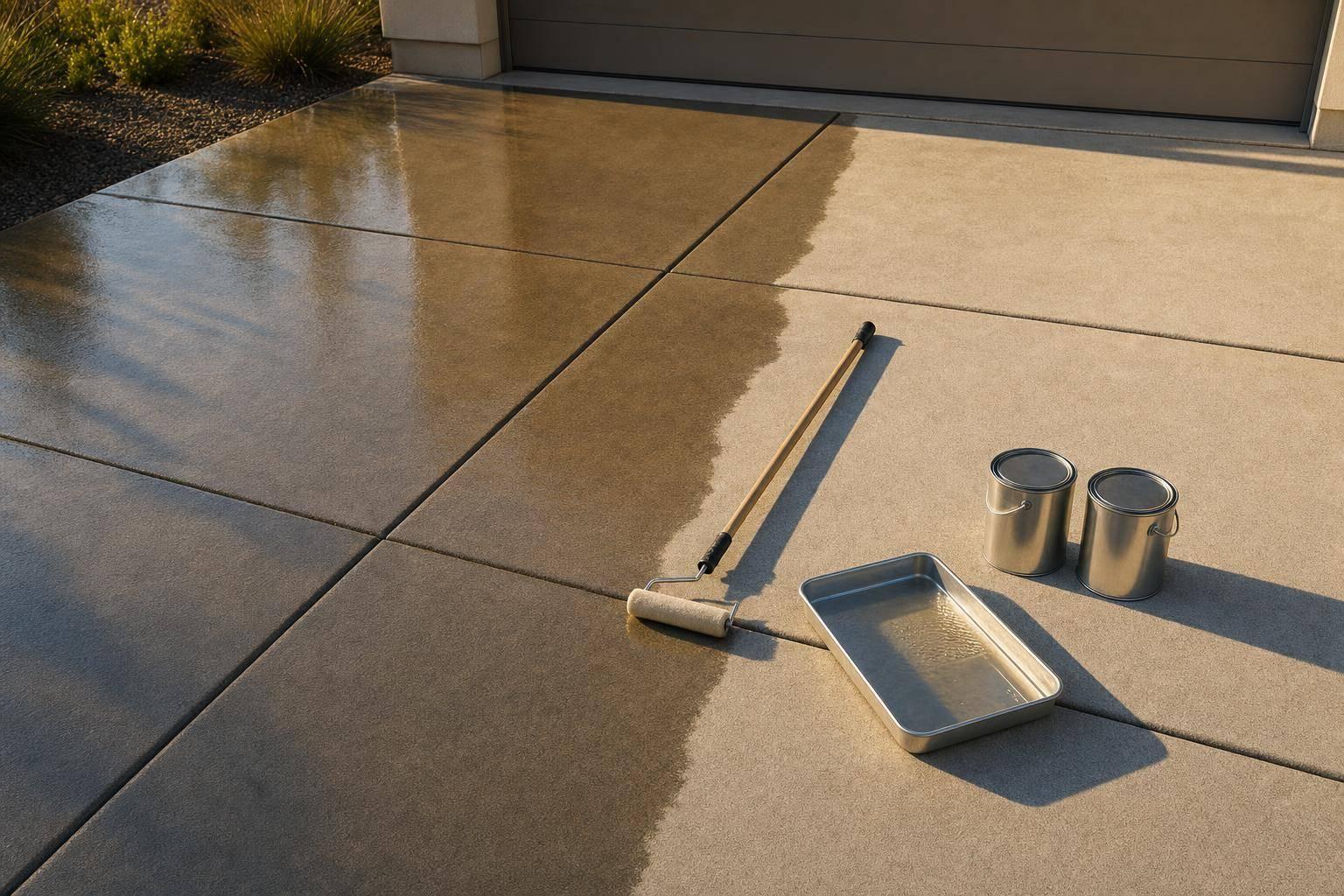
A good concrete sealer calculator takes the guesswork out of buying materials for a driveway, patio, garage floor, or commercial slab. Instead of relying on a rough rule of thumb, this tool looks at surface area, concrete condition, sealer type, and coat count to give you a more useful estimate. That matters because smooth concrete and weathered concrete can absorb product very differently.
What Changes Coverage?
Texture and porosity have a big impact on spread rate. A dense basement floor may need far less product than a stamped pool deck or older sidewalk with a rough finish. The same is true when you move from an acrylic coating to a penetrating sealer, epoxy, or polyurea. Each product behaves differently, and every added coat increases total material needs.
Plan Gallons and Cost Before You Buy
This concrete sealer calculator helps you estimate gallons required, add a waste percentage, and even project material costs for polyurea vs. epoxy if you know the price per gallon. It’s useful for both DIY jobs and professional estimating. For the best results, treat the tool as a smart planning guide, then compare its numbers with the manufacturer’s published coverage rates. Product labels should always take priority over general estimating ranges.
FAQs
How accurate is a concrete sealer calculator?
A concrete sealer calculator gives you a strong planning estimate, especially when you know the surface area, sealer type, and number of coats. Real-world coverage can still shift based on porosity, texture, age of the slab, and whether the concrete has been sealed before. Smooth, dense concrete usually uses less product, while rough, weathered, or stamped surfaces often absorb more. For the best result, use the calculator as a budgeting and purchasing guide, then compare the estimate with the manufacturer’s stated spread rate on the specific product you plan to buy.
Why does porous or stamped concrete need more sealer?
Porous and textured concrete has more surface area and more open space to absorb liquid sealer. That means each coat tends to cover fewer square feet per gallon than it would on a dense, smooth slab. Stamped concrete can be especially tricky because grooves, pattern depth, and texture increase the amount of product needed. If the slab is older, chalky, or exposed to weather, coverage can drop even more, which is why adding a waste allowance is smart.
Should I use typical coverage rates or enter a custom rate?
If you’re comparing options early in the project, typical coverage rates are great for a quick estimate. They help you get a realistic range based on common sealer behavior on different concrete conditions. If you’ve already picked a product, custom coverage is the better choice because it reflects the manufacturer’s tested spread rate. That’s usually the most reliable number for ordering material, especially for specialty epoxies, polyurethanes, and premium penetrating sealers.