If I’m picking a floor coating for a busy space, I focus on four things first: install time, return-to-use time, slip texture, and warranty terms. For many garages under 900 sq. ft., installation can take 6–10 hours, you can often walk on the floor in 12–24 hours, and drive on it in about 72 hours. But slab damage, cold weather, moisture, and older coatings can add time.
Here’s the short version:
- Busy spaces need more than a good look. They need a coating that can handle vehicles, water, spills, de-icer, carts, and temperature swings.
- Texture matters. More grip helps on wet or sloped surfaces, but rougher finishes usually need more cleaning.
- Cleaning is simple if I use the right products. A dust mop or broom, plus a pH-neutral cleaner mixed at about 1–2 oz. per gallon of warm water, is the basic routine.
- Cold weather can still work. Some systems can be installed at temperatures as low as 20°F, though cure times may stretch.
- Warranty terms need a close look. “Lifetime” often covers peeling, chipping, delamination, or UV fade tied to product or install issues – not wear, misuse, slab movement, or moisture coming up through the concrete.
If I’m comparing options, I don’t stop at color or gloss. I look at how long the space will be out of use, how slippery it may get when wet, how much cleaning it will need, and what the warranty says in writing.
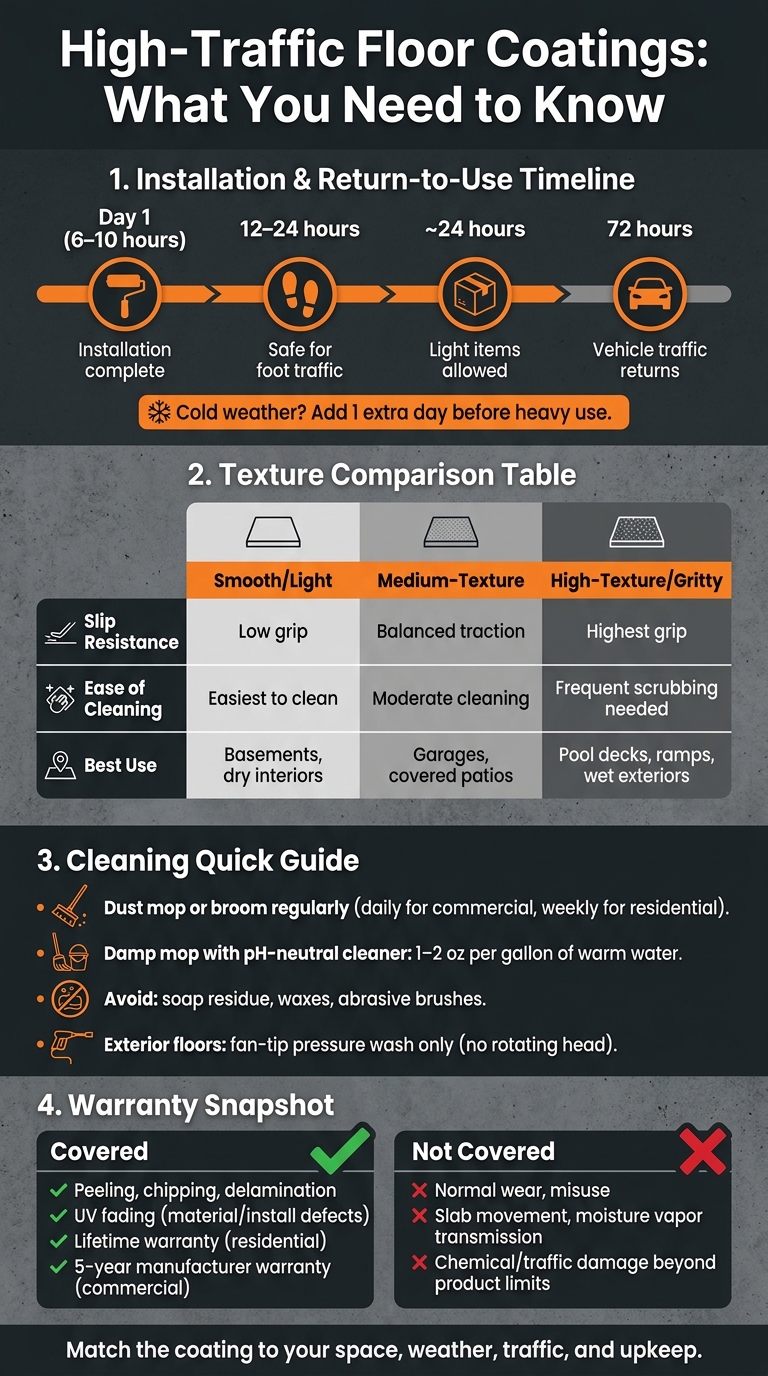
High-Traffic Floor Coatings: Install Time, Texture & Warranty at a Glance
High-Traffic Industrial Epoxy Flooring | Production Facility Floor Coating
sbb-itb-a0e5ae3
Quick Comparison
| Topic | What I’d Expect |
|---|---|
| Install time | 1 day for many residential garages up to 900 sq. ft. |
| Foot traffic | 12–24 hours |
| Light use | About 24 hours |
| Vehicle traffic | About 72 hours |
| Cold-weather install | Some systems can go down at 20°F |
| Best low-texture areas | Basements, dry interior spaces |
| Best medium-texture areas | Garages, covered patios, entries |
| Best high-texture areas | Pool decks, ramps, wet exterior areas |
| Basic cleaning | Sweep often, damp mop with pH-neutral cleaner |
| Typical warranty limit | Covers coating failure, not normal wear or misuse |
That’s the core of it: match the coating to the space, the weather, the traffic, and the upkeep you can live with.
Installation Time and Downtime Planning
How Long Installation Usually Takes
Downtime is usually the first thing people ask about. And for good reason. If your garage is out of service, you want to know how long life will be a little inconvenient.
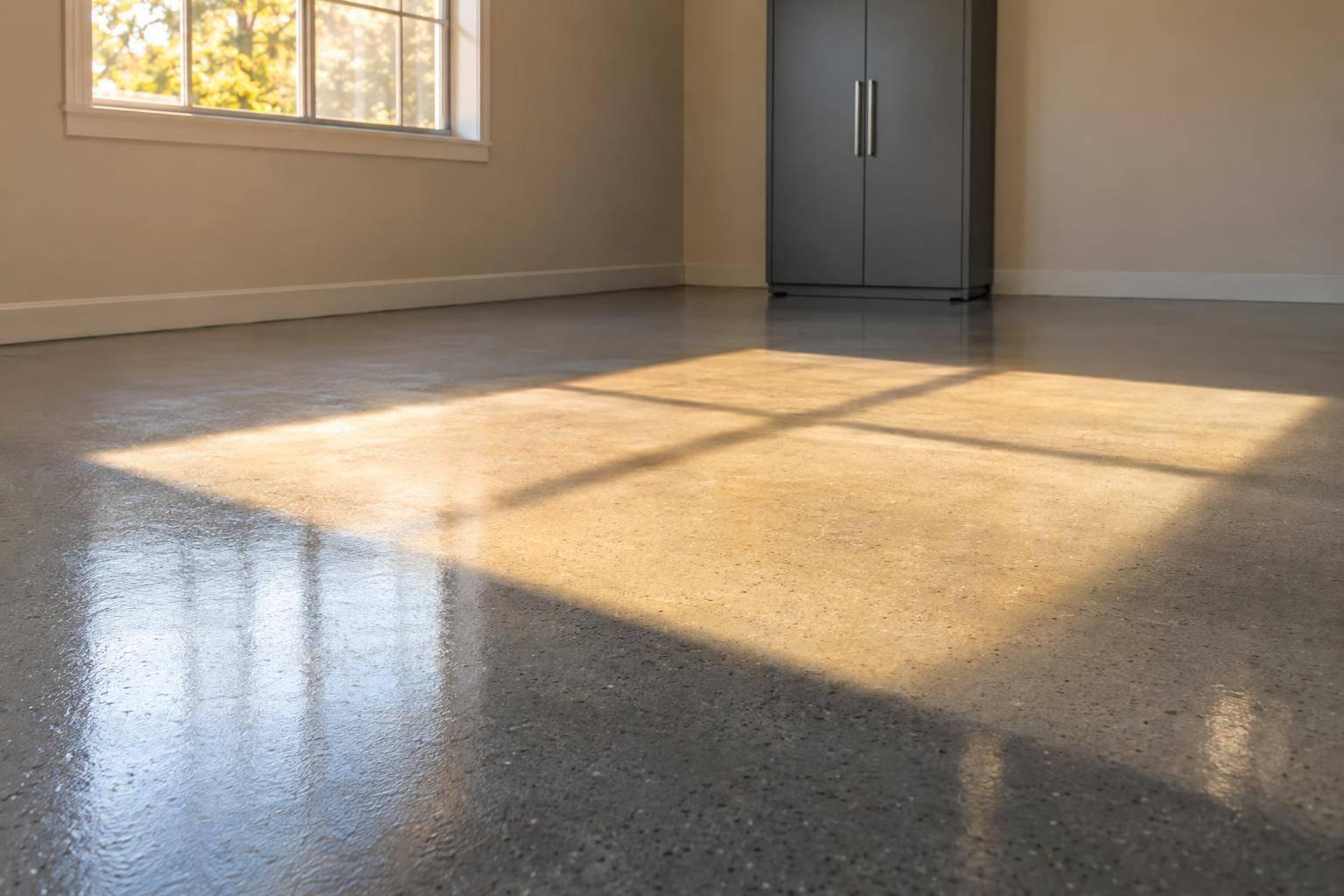
For most residential garages up to 900 sq ft, installation can be finished in one day, often in about 6–10 hours. That usually covers site protection, surface prep, repairs, testing, coating, and cleanup.
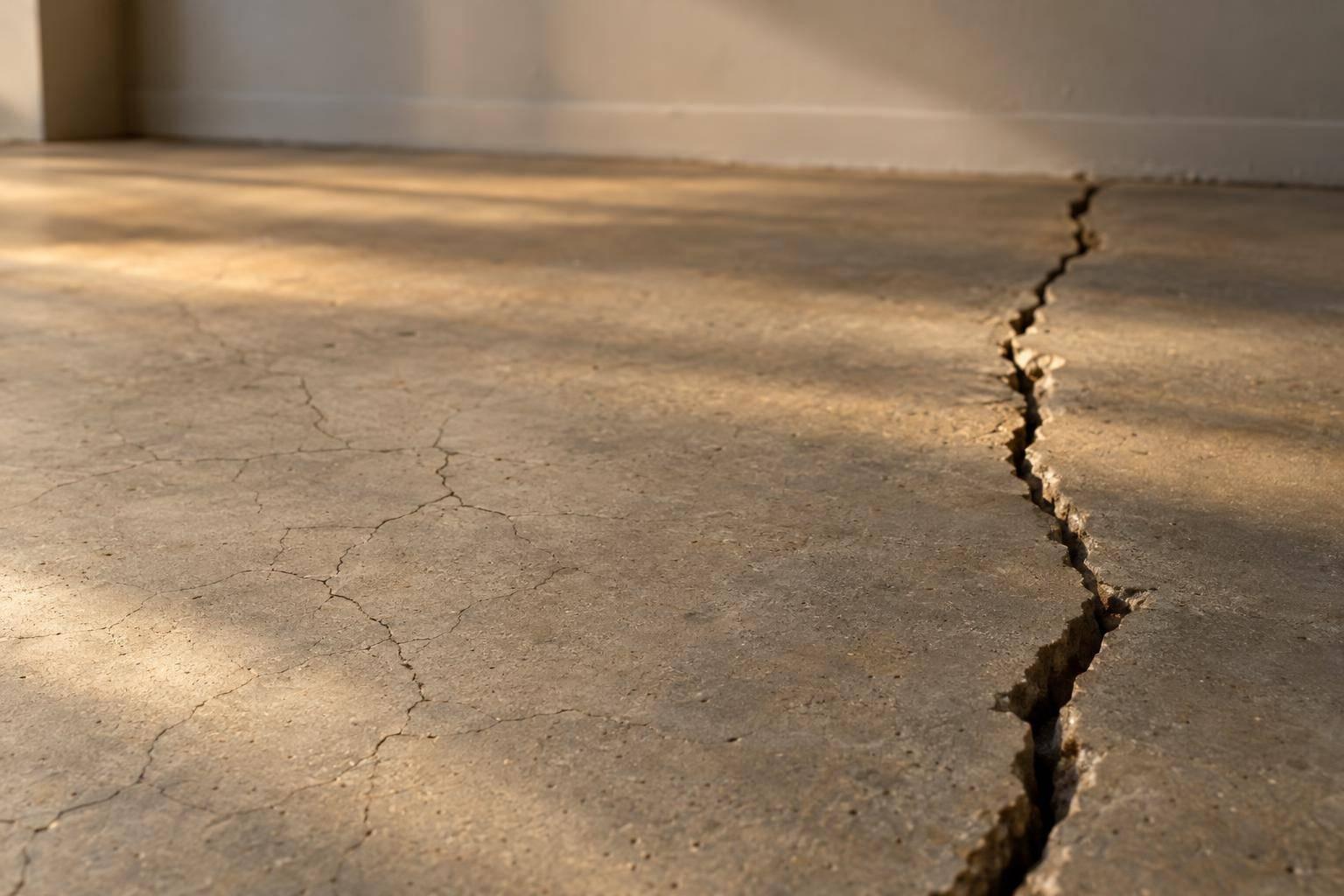
That said, not every floor wraps up in a single visit. The condition of the slab plays a big role in the schedule. Proper surface preparation is essential to address these issues before the coating is applied. If the concrete has major cracks, high moisture readings, oil-soaked areas, or old coatings that need to be ground off, the job can take longer. Larger commercial spaces also tend to need work in stages, which often means a 2–3 day timeline.
Walk-On Time, Light Use, and Full Use: What to Expect
Getting the floor installed is one part of the plan. Getting back to normal use is the other.
Service comes back in steps:
- 12–24 hours for foot traffic
- About 24 hours for light items
- 72 hours for vehicles
If temperatures are colder, add one extra day before heavy use.
Put simply, most garages up to 900 sq ft can be installed in one day, with 12–24 hours before you can walk on the floor and 72 hours before vehicle traffic returns.
How Croc Coatings Supports Fast Turnaround

Croc Coatings installs the Penntek Evolution industrial coating system for garages, patios, pool decks, basements, and industrial spaces across North Idaho and Eastern Washington. When the slab condition and weather cooperate, crews can handle prep, base coat, chip broadcast, and topcoat in one visit.
Before work starts, the team does an on-site assessment to set a clear schedule and cure timeline.
Once the floor is back in service, texture and cleanability usually become the next things people want to sort out.
Slip Texture, Safety, and Daily Cleaning
Choosing the Right Texture for Dry, Wet, and Sloped Areas
Pick texture based on moisture, slope, and foot traffic. Smooth concrete can get slick when wet. A broom finish adds grip in both wet and dry spots.
Use more texture in places where water, slope, or bare feet are part of daily use. Pool decks, ramps, and exterior steps are the clearest examples. Use less texture in dry, flat areas like finished basements or covered entries, where easy cleanup tends to matter more.
Croc Coatings can adjust texture to fit the space, from smoother interior floors to grippier finishes for wet areas.
That balance between grip and upkeep is the main trade-off when choosing texture. Professionals often use ASTM slip resistance testing to quantify these safety levels.
Texture Trade-Offs: Grip vs. Cleanability
More texture holds more dirt and calls for more cleaning. That’s the main trade-off. It doesn’t mean you should avoid high-texture finishes. It just means your cleaning routine should fit the floor.
| Finish Type | Slip Resistance | Ease of Cleaning | Best-Use Settings |
|---|---|---|---|
| Smooth / Light | Lowest grip; can be slick when wet | Easiest to sweep and mop | Finished basements, dry retail, interior entries |
| Medium-Texture | Balanced traction for occasional wetness | Moderate; works with soft-bristle brooms and squeegees | Garages, covered patios, commercial entries |
| High-Texture / Gritty | Highest grip, especially when wet or on slopes | Requires more frequent scrubbing | Pool decks, outdoor ramps, wash-down zones |
The right texture pays off over time only if you clean the floor the right way.
Routine Cleaning for High-Traffic Coated Floors
High-traffic coated floors are simple to maintain when you use the right method. Sweep or dust mop on a regular basis to remove grit. In busy commercial spaces, that usually means daily. In residential garages, weekly is often enough.
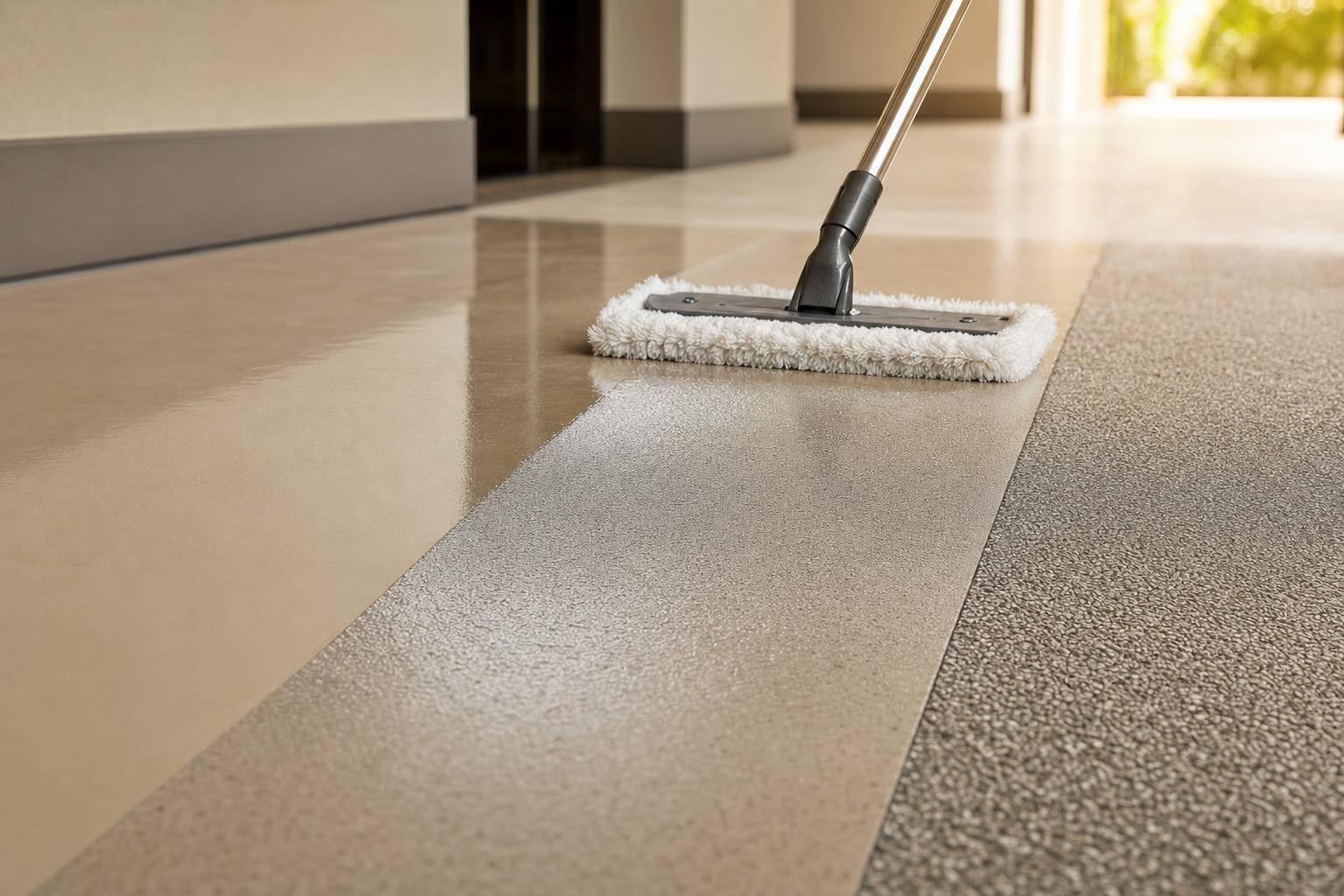
For wet cleaning, use a damp mop with a pH-neutral cleaner, usually 1–2 oz per gallon of warm water. Skip soap residue, waxes, and abrasive brushes. They can cut traction or wear down the finish. For exterior floors, use moderate pressure with a fan tip, not a rotating head.
Good cleaning habits help preserve traction and extend service life.
Lifespan, Cold-Weather Use, and Long-Term Value
How Long High-Traffic Coatings Can Last
After cleaning and texture, the next thing buyers want to know is simple: how long will the floor last?
The answer depends on traffic, surface prep, and day-to-day care. But high-end polyurea and polyaspartic systems are made for long service in busy spaces. A lot of it comes down to build quality and how well the coating stands up to chemicals.
Croc Coatings installs the Penntek Evolution system, which is rated 4x stronger than traditional epoxy, bonds tightly to prepared concrete, and resists UV exposure, chemical spills, and temperature swings that can make lower-grade coatings peel or turn yellow over time.
In busy settings like tire shops, fabrication bays, or school corridors, it helps to do a visual check once a year. Pay close attention to loading zones, drains, and chemical storage areas, since those spots usually show wear first. If you notice dull areas or the texture starts wearing down there, a re-topcoat can bring the floor back without tearing out and replacing the full system.
That question of wear gets even more important in cold climates and in buildings that see heavy daily use.
Can Coatings Be Installed in Cold Weather
In North Idaho and Eastern Washington, this is a big deal. Winter hangs around, and project timing can get tight.
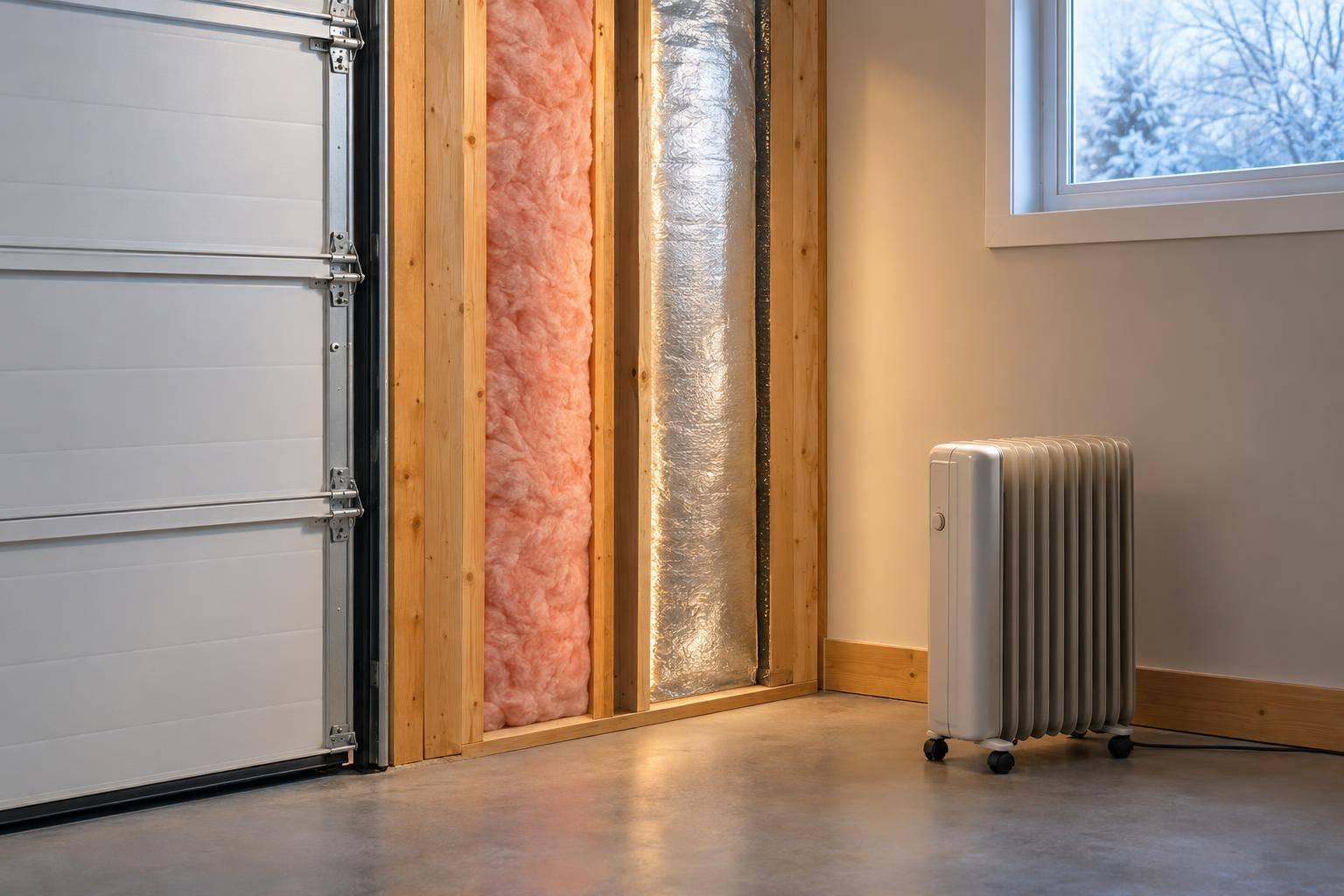
The good news is that many modern polyurea and polyaspartic systems can be installed in cold weather, and some are approved for application in temperatures as low as 20°F. That said, cold weather slows cure times. So the wait time before people can walk on the floor – or before vehicles can get back on it – usually gets longer in winter.
For shops that run forklifts or other heavy equipment, it often makes sense to schedule installation during a slower weekend. That gives the coating more time to cure before full-weight traffic comes back.
Why Durability Matters in Cost Planning
At the end of the day, the bigger issue is total cost over time.
A floor that lasts longer can cut repeat labor, downtime, and replacement work, which lowers total cost in the long run. That’s why durability isn’t just about wear. It also shapes how buyers should think about warranty coverage and what that coverage needs to include.
What a Lifetime Warranty Means and Key Takeaways
What a Lifetime Warranty Usually Covers
After lifespan, the next thing to look at is warranty coverage. A lifetime warranty usually covers specific coating failures, not day-to-day wear or damage from misuse. In most cases, that means issues like peeling, chipping, delamination, and UV fading on UV-stable coatings when the cause is a material or installation defect.
That said, warranties usually come with limits. Common exclusions include structural slab movement, water pressure under the slab, moisture moving up through the concrete, misuse, and damage from traffic or chemicals that go past the product’s limits.
For Croc Coatings, residential projects qualify for a lifetime warranty. Commercial installations are covered by a 5-year manufacturer’s warranty through the Penntek Evolution system. Get that coverage in writing before work starts. It can save you a headache later.
Questions to Ask Before You Schedule a Project
Once you understand the coverage terms, pin down the project details that can affect both performance and future claims. Get the main points in writing before you sign.
Helpful questions to ask include:
- Return-to-use timeline: When can you walk on it, park vehicles on it, and get back to full use?
- Texture recommendation: What slip-resistant texture makes sense for your space – dry, wet, or sloped?
- Cleaning requirements: Which products are safe to use, and which ones could affect warranty coverage?
- Cold-weather limits: What is the minimum installation temperature, and how does winter change cure time?
- Warranty transferability: If you sell the property, does the warranty move to the new owner?
- Written terms: Can you send the full warranty document before I sign?
Also ask for the warranty terms and claim requirements in writing before the project begins. If something goes wrong, that paperwork matters.
Key Points to Remember
Before choosing a coating, look at how the system performs, how much upkeep it needs, and what the warranty actually covers. A fast install sounds great, but that alone doesn’t tell the full story. Texture, cleaning needs, climate fit, and warranty terms all shape long-term value.